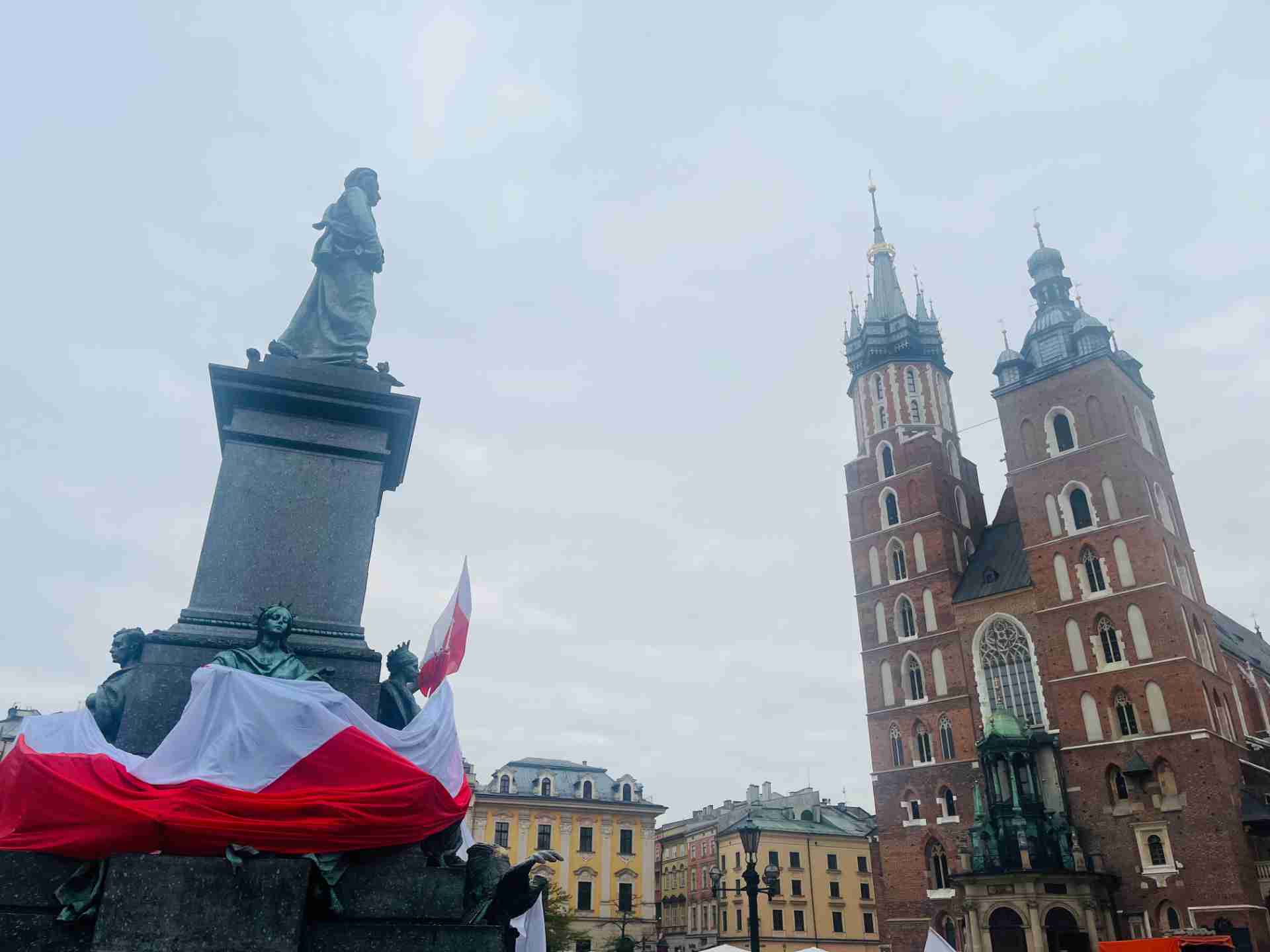
Kraków in 2026 is a working European city — global tech companies, good coffee, trams that actually run on time, and a medieval centre that somehow still feels lived-in rather than laminated. Here is what to see when you have limited time and don't want a list of tourist traps.
Kraków in 2 Hours: What to See When You're Short on Time
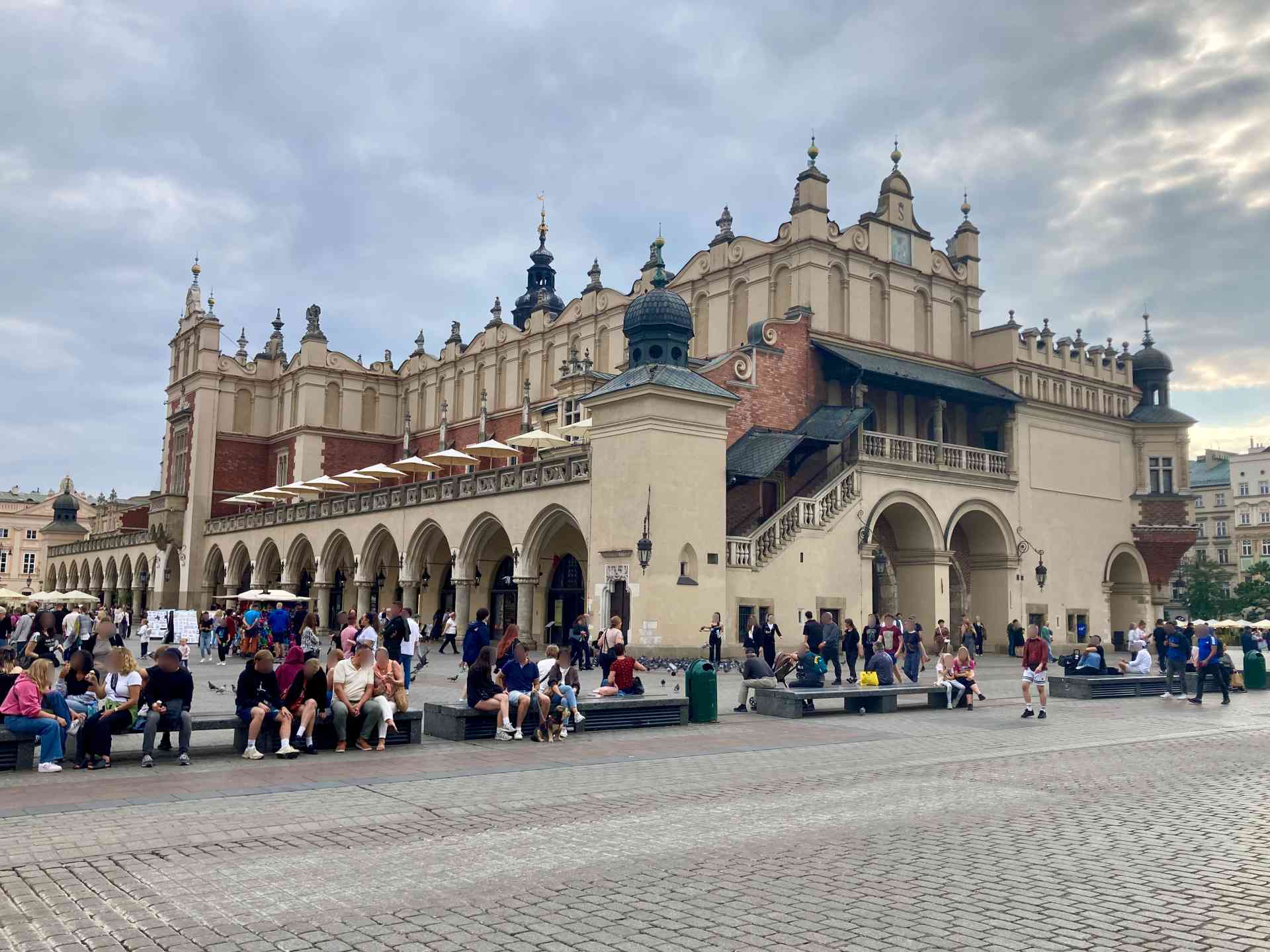
Two hours is enough to feel the city. Start at the Main Market Square — buy an obwarzanek (the local ring-shaped pretzel, 2 PLN, sold from wheeled carts) and walk slowly across the square. The building in the centre is the Cloth Hall, trading since the 13th century. St Mary's Basilica closes the eastern side — the bugle call from the tower sounds every hour on the hour and cuts off mid-phrase. There's a reason for that. Ask a local.
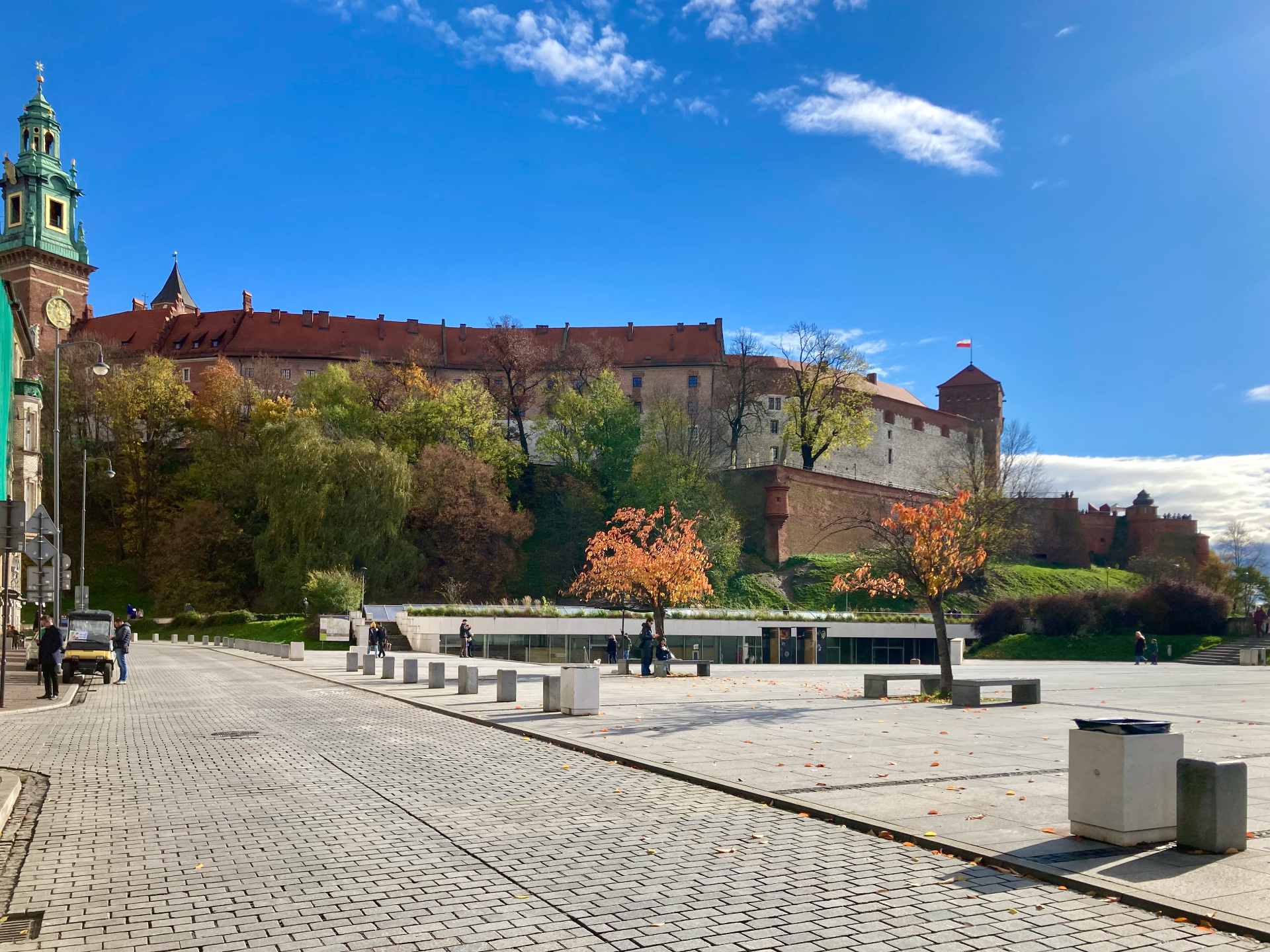
Walk south down ul. Grodzka — the old road from the market to the castle — and climb Wawel Hill. The courtyard is free. The view of the Vistula from the walls is one of those views. That's your two hours.
Kraków What to See — The Essentials
Kraków has a dense, walkable centre. Everything below is reachable on foot from the Market Square in under 20 minutes.
Main Market Square (Rynek Główny)
Europe's largest medieval market square. Always open. Free to walk. The Cloth Hall and St Mary's Basilica are here.
Wawel Castle & Cathedral
Royal seat for 500 years. Courtyard free. Museum exhibitions: book online. Give yourself 1.5–2 hours.
Kazimierz
15-minute walk south of the Square. The city's most atmospheric neighbourhood — cafés, galleries, good restaurants. Better in the evening.
Planty
4 km of park encircling the Old Town on the line of the demolished medieval walls. Good for an evening walk after dinner.
Quick Guide Kraków — How to Move Around
Trams are the fastest way to get around. The network is good, Wi-Fi exists almost everywhere, and the app Jak Dojadę plans your route in Polish and English. Uber and Bolt both work reliably. Driving into the centre in 2026 means dealing with the Clean Transport Zone (SCT) — check sct.zdmk.krakow.pl before bringing a car. The city was built for far less traffic than it now carries.
City bikes (LajkBike) are available at docking stations throughout the centre — first 20 minutes free with a registered account. Good for getting between Kazimierz, Wawel and the Market Square without fighting tram crowds.
Kraków in 3 Hours: A Tight but Complete Loop
Market Square (30 min) → ul. Grodzka south → Wawel courtyard and walls (45 min) → walk along the Vistula riverbank east → Kazimierz, Plac Nowy for a zapiekanka (30 min) → tram back to centre. That's 3 hours, about 4 km of walking, and you'll have seen the city's three distinct layers: royal, neighbourhood, river.
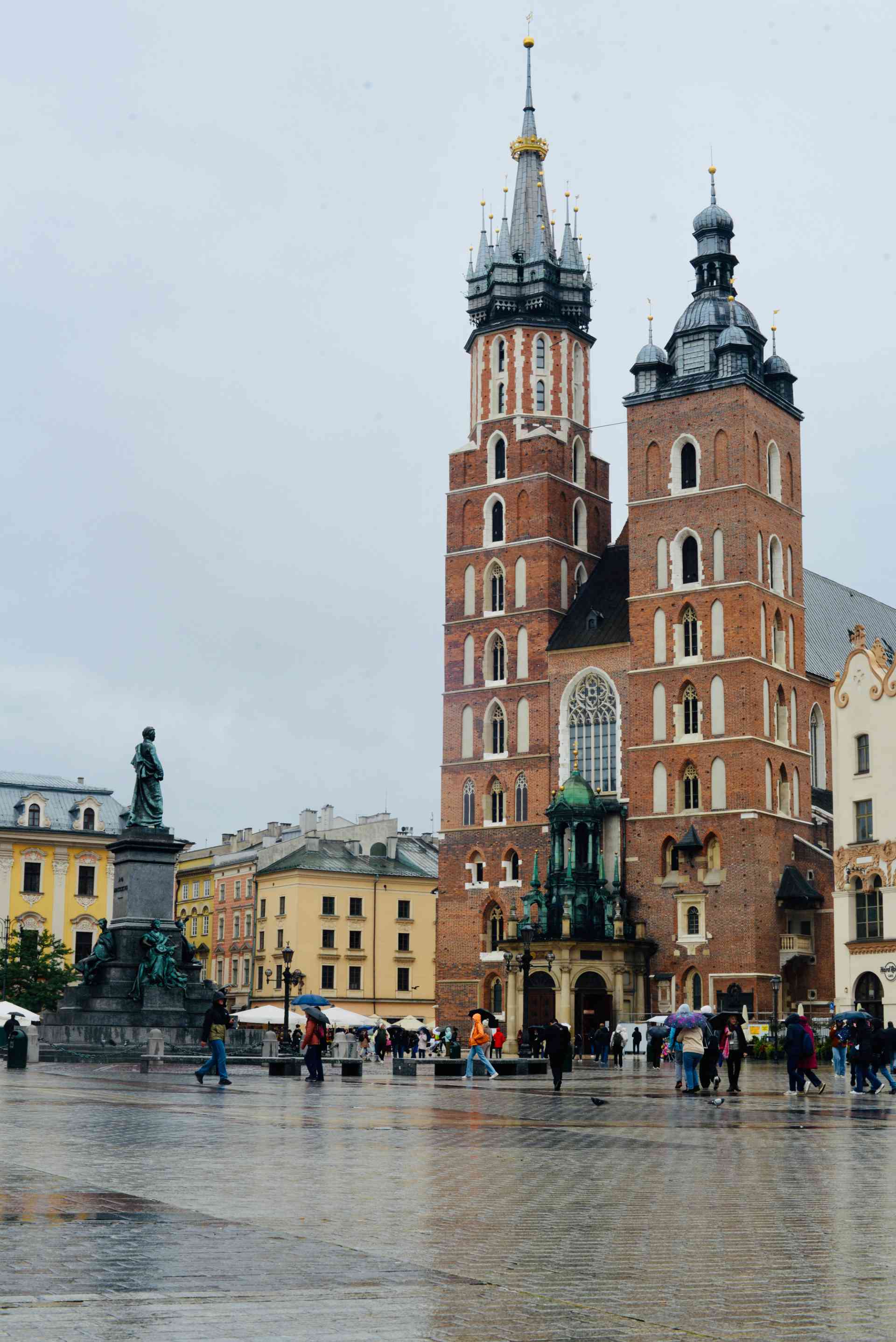
Market Square, 2026 — the city trades, eats, argues and meets here exactly as it has for 700 years
Kraków at a Glance — The City Today
Kraków in 2026 is not a museum city. It has the highest concentration of business service centres in Poland — Google, IBM, Cisco, Revolut, Shell and over 280 others employ more than 100,000 people here. The result is a city that functions: good restaurants that don't depend solely on tourists, a functional transport network, a young population that speaks English, and coffee shops that open early.
The medieval centre is real — it wasn't rebuilt after the war, it survived — but it coexists with a working city. The tram runs past the 14th-century Cloth Hall. The café next to the Romanesque church has excellent flat whites. This is the thing about Kraków that surprises visitors most.