Most visitors arrive in Kraków and head straight to the Market Square. This route does the opposite — it starts on the city's southern edge and approaches the centre the way traders did for centuries, through neighbourhoods rather than tourist corridors. The result is a Kraków most visitors never see.
Krakow What to See — The Full Merchant Route
Start outside the centre and work your way in. Total walking: ~6 km. Tram section: ~20 minutes. Can be done any day, best in good weather.
Divine Mercy Sanctuary — observation tower
Take a taxi or Uber south (about 15 PLN from the centre). The observation tower above the sanctuary gives the best panorama of Kraków — the whole bowl of the city, the river, Wawel on its hill. Entry: whatever you want to give. This is how you understand the city's geography before walking into it. → Map
Tram no. 11 — ride into the centre
Walk to the tram stop and board tram 11 heading north. This is a working city tram, not a tourist attraction — Kraków runs on trams. Get off at the Korona stop. Ticket: 4 PLN, validate on board. → Journey planner
Podgórze — the city across the river
Podgórze was a separate town until 1915. Getting off the tram here, before crossing the river, you're in what was once a rival settlement to Kraków. The architecture is different, the pace is different. Today it's home to galleries, studios and some of the city's better restaurants. → Map
Rzeczy Same & Pan Tu Nie Stał — Polish design shops
Two shops worth stopping for. Rzeczy Same (ul. Józefińska) and Pan Tu Nie Stał (ul. Józefińska) sell contemporary Polish design — ceramics, textiles, prints. Not souvenir-shop material. If you're buying something to bring home, buy it here. → Map
Bernatka Footbridge — crossing the Vistula
The pedestrian and cycling bridge across the river. The view of Wawel from the middle of the bridge — that's the one. → Map
Kazimierz — Singer café or Warsztat for food
Singer (ul. Estery 20): original sewing machines as tables, always full, good coffee. Warsztat (ul. Józefa): seasonal Polish menu, honest prices. This neighbourhood has the best café density in the city. → Singer on map
Ul. Dietla — a buried river
The wide street you're crossing follows the old course of the Vistula, filled in and relocated in the 19th century. Under the tram tracks and asphalt: a river. One of those things that changes how you see a city once you know it. → Map
Wawel — approach from the river
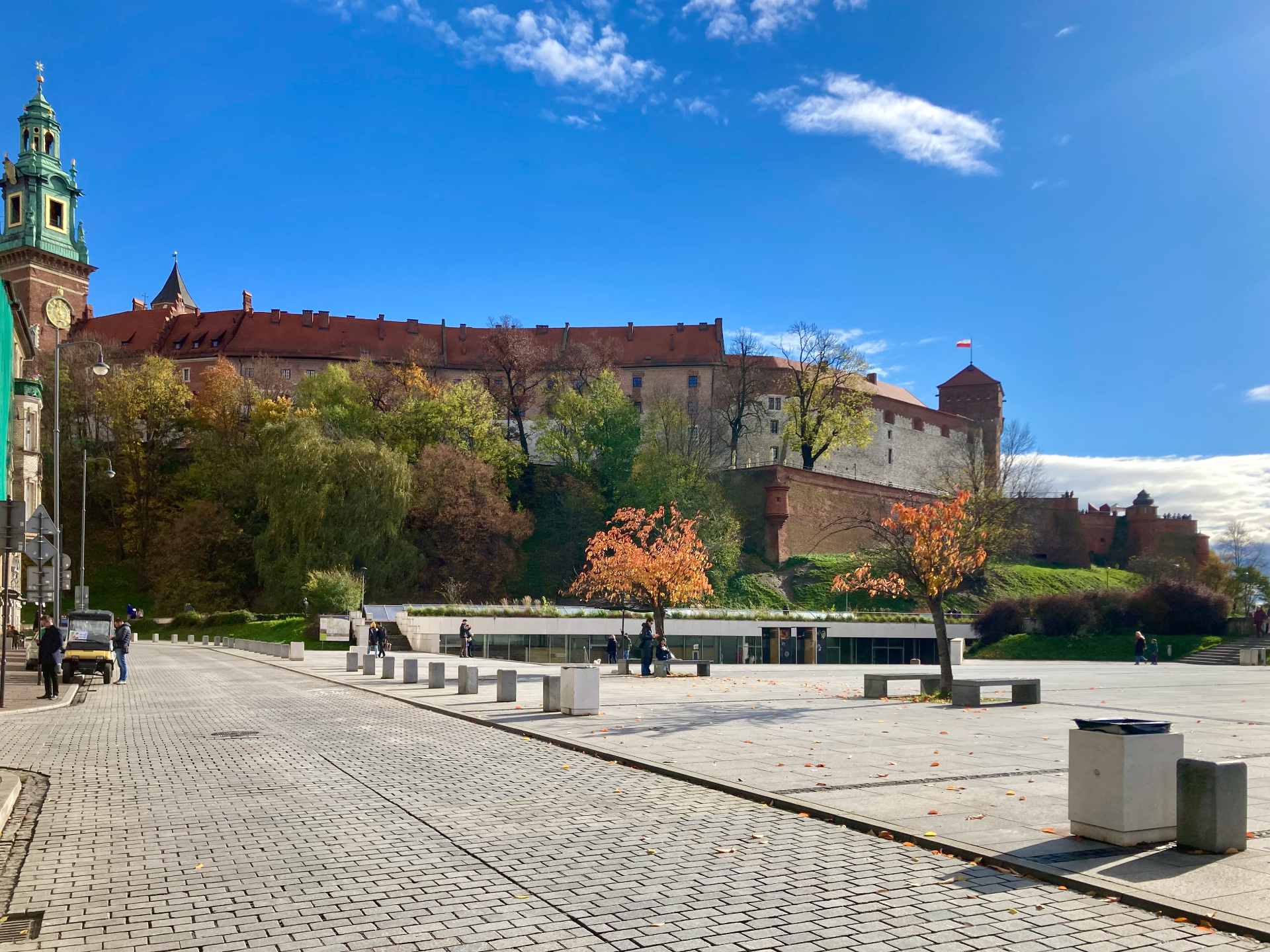
Come at Wawel from the Vistula side, not from ul. Grodzka. The view of the hill from the riverbank is the correct view — the one that makes sense of why a city grew here. Courtyard: free. Dragon's Den: seasonal, children's favourite. → Map
Ul. Grodzka — into the Old Town
The road that has connected the castle to the market since the medieval city was built. Walk it slowly north — the buildings on both sides have been here, in various forms, for 600 years. → Map
Main Market Square — Cloth Hall
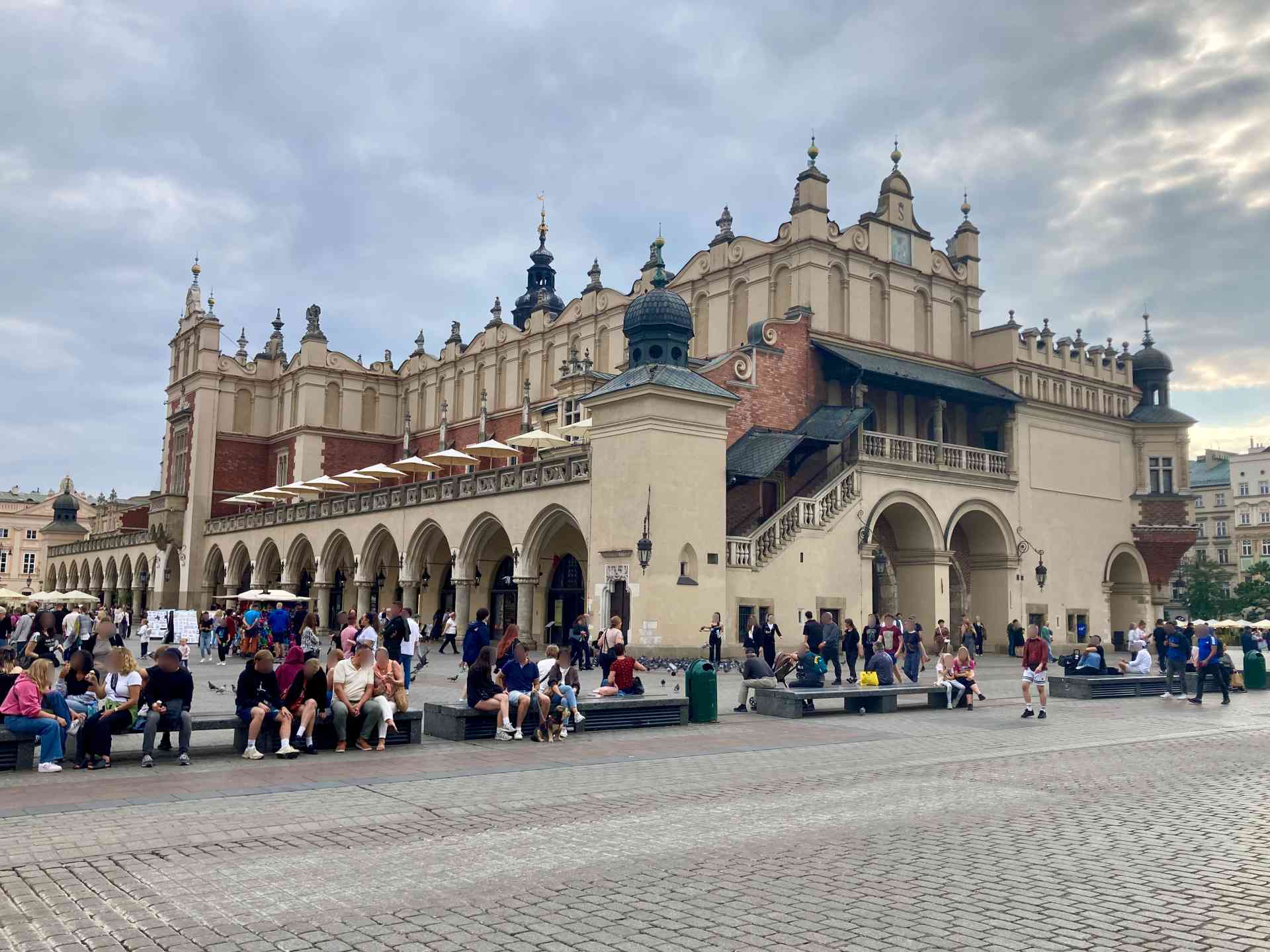
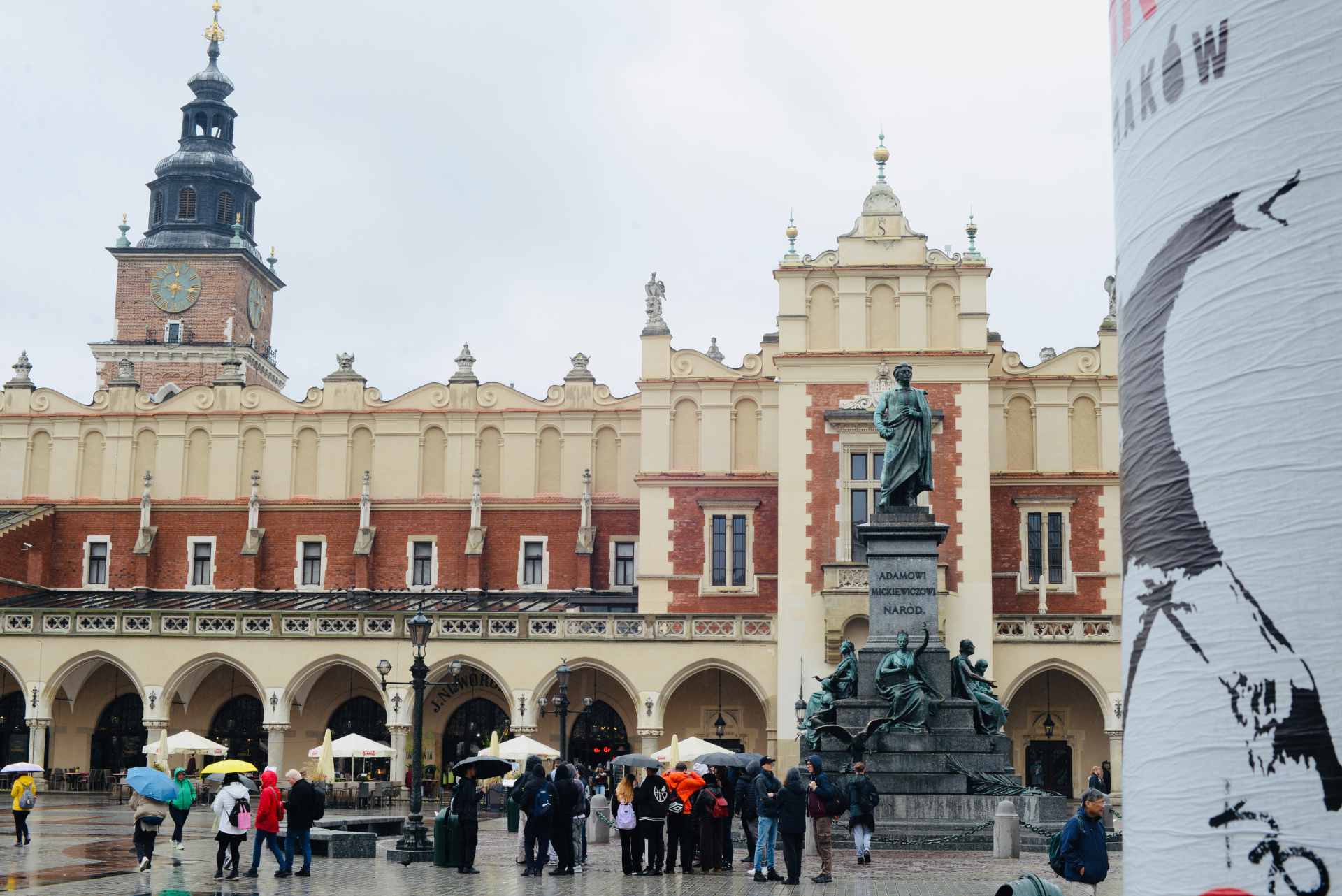
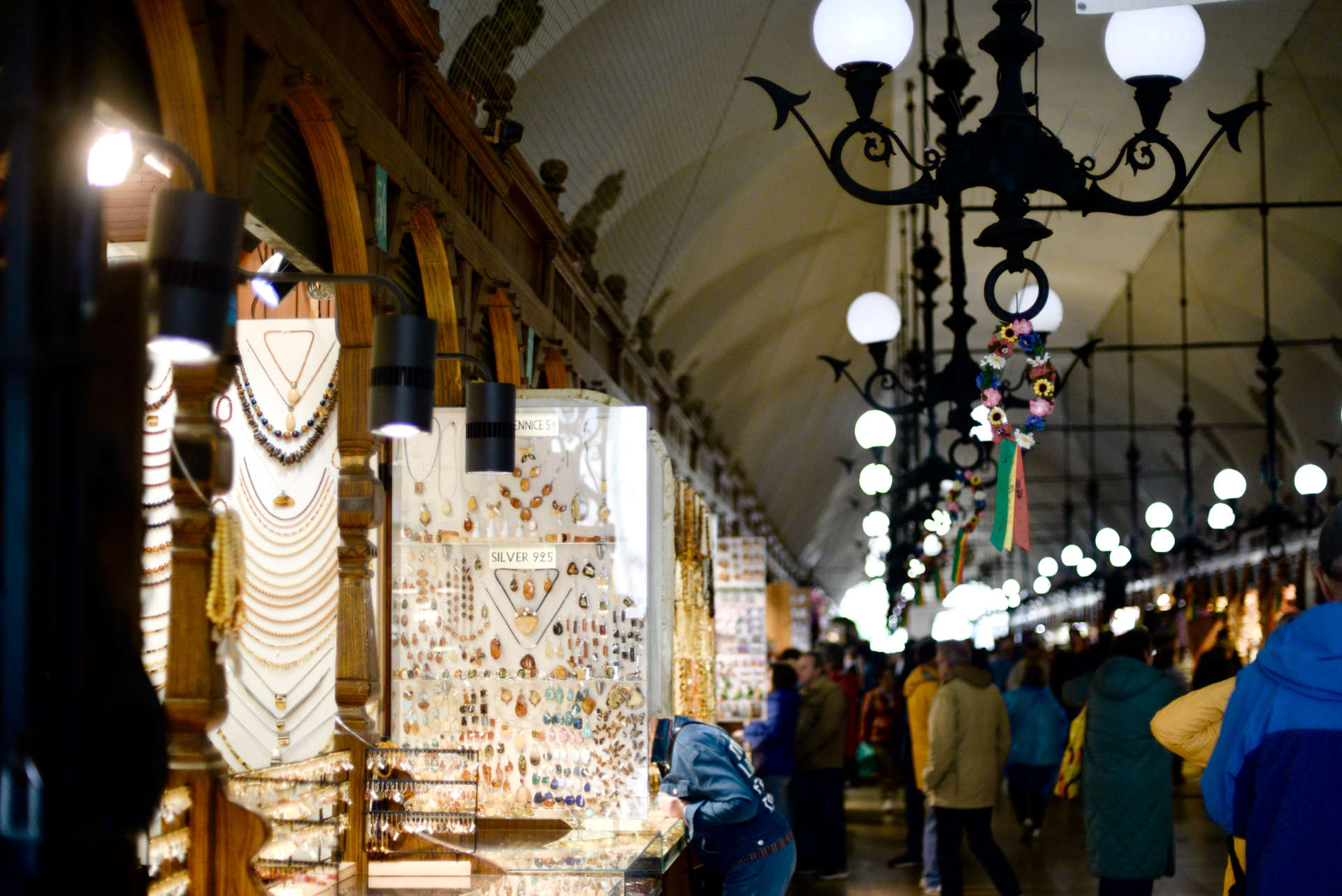
You've arrived. Buy an obwarzanek (2 PLN from the wheeled carts). The Cloth Hall has been trading here since the 13th century — it is, in its way, one of Europe's oldest indoor markets. Gallery upstairs, shops at ground level. The bugle call from St Mary's sounds every hour. → Map
Ul. Floriańska → Florian Gate → Barbican
Leave the city the way merchants left it — north along ul. Floriańska, through the Florian Gate, and out to the Barbican. One of the few surviving medieval fortifications of its type in Europe. You're now officially outside the old walls. → Map
Krakow in 2 Hours: Short Version — Rzeczy Same to Market Square
Start at stop 4 (the design shops in Kazimierz) and walk to the Market Square via Wawel. About 2 hours, 3 km. Good for an evening when you have time but not all day. Dinner at Miód Malina (ul. Grodzka 40) as a finish.
Krakow in 45 Minutes: The Absolute Minimum
Market Square → obwarzanek → Cloth Hall → walk south down ul. Grodzka → Wawel courtyard (free) → view from the walls. 45 minutes, zero cost, genuine Kraków. If you have 30 minutes more: coffee at Kawiarnia Prowincja on the way back.