Kraków is one of the few large European cities not destroyed in the 20th century. The medieval centre, Wawel, the Kazimierz tenements and modernist Nowa Huta are originals, not reconstructions. But Kraków's history is also the history of its neighbours — Kazimierz, Podgórze, Dębniki — all once independent towns.
Wawel and the Old Town — the centre for 1,000 years
Wawel Hill was the seat of Polish kings for five centuries. Coronations, royal funerals, the outbreak of wars and their conclusions — all here. The courtyard is free; museum exhibitions are worth booking online. Ul. Grodzka, running from the castle to the market, has four churches in 500 metres, including the Romanesque Church of St Andrew from the 12th century.
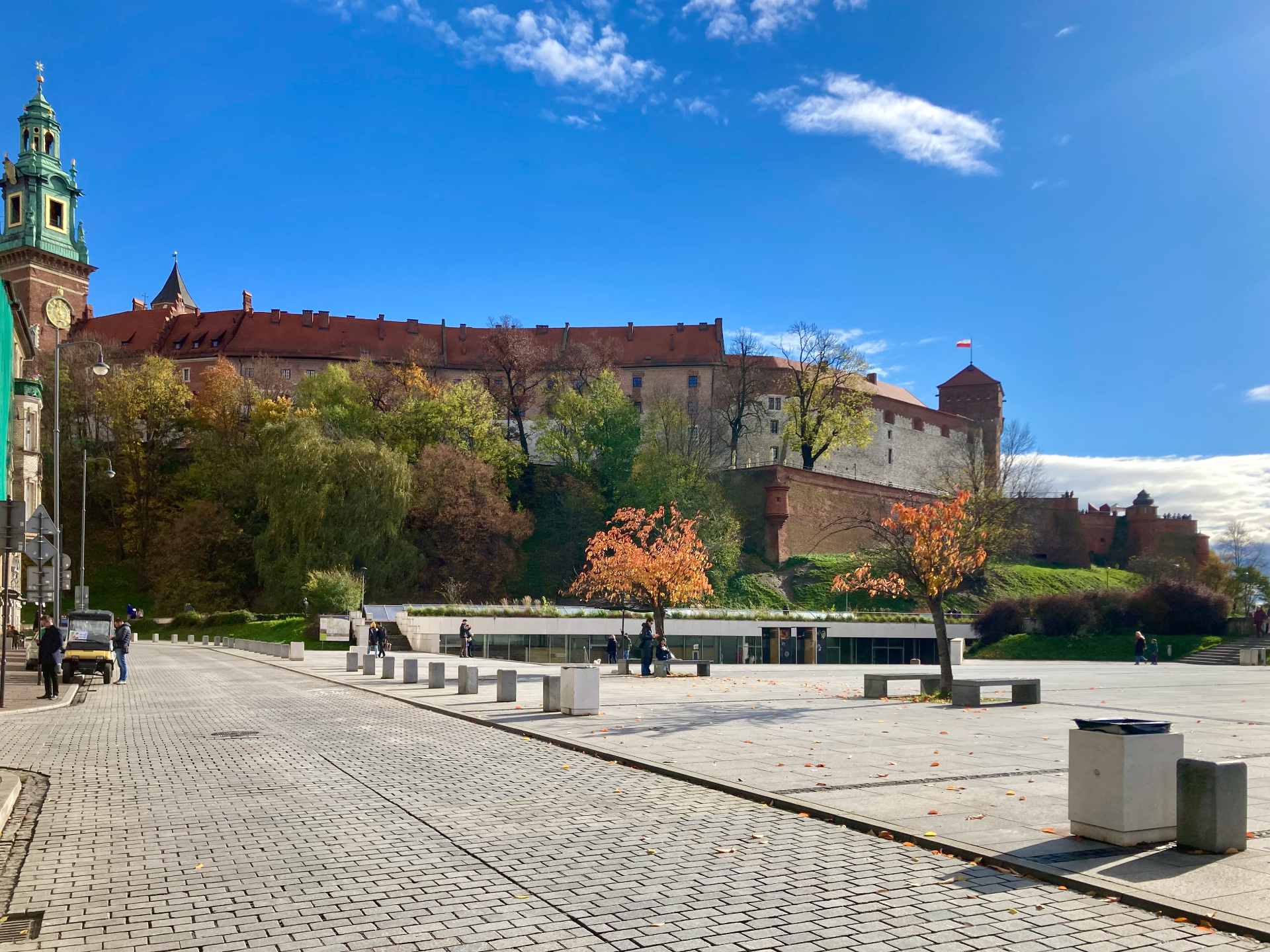
Kazimierz — a separate town until 1791
Kazimierz had its own market square, its own administration, its own character. Today it's Kraków's most atmospheric neighbourhood — cafés, galleries, narrow streets. Better in the evening, when the tourist groups leave and only residents and atmosphere remain.
Podgórze — the town across the river
Podgórze, founded by the Austrians in 1784 as a rival settlement to Polish Kraków, was a separate town until 1915. Its architecture is different, its street proportions different. On Plac Bohaterów Getta stands one of the most important monuments in Poland — empty chairs marking the wartime deportations. Nearby, steps lead up to Park Bednarskiego — little-known, rarely photographed, they bring you to a terrace with one of the best panoramas in Kraków: Wawel, the river, the mounds, and on a clear day the Tatras.
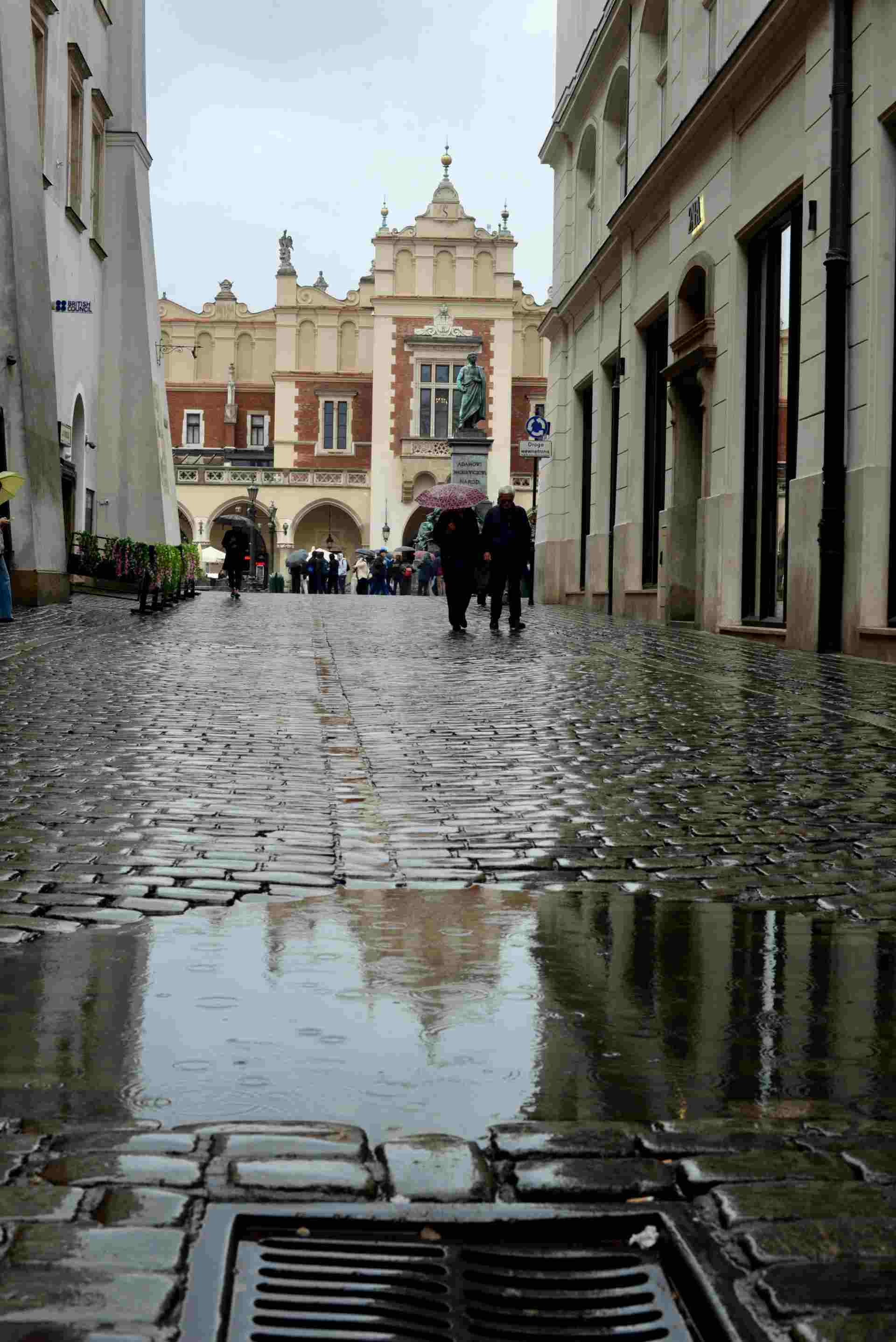
Podgórze — its own character, its own history, nothing like the Old Town
Dębniki — across the river, quietly
Dębniki is a calm residential neighbourhood on the left bank of the Vistula. A Carmelite monastery here was home and workplace to a young Karol Wojtyła — the future Pope John Paul II — during the war years. The Church of the Carmelite Fathers on ul. Rakowicka is one of the less obvious John Paul II sites in Kraków.
Nowa Huta — socialist realism that survived
Built from scratch in the 1950s as a model communist city, Nowa Huta is one of the best-preserved examples of socialist realist urbanism in Europe. Plac Centralny, wide boulevards, monumental housing blocks — and today, ordinary life happening among all of it. Tram from the centre: about 25 minutes.